
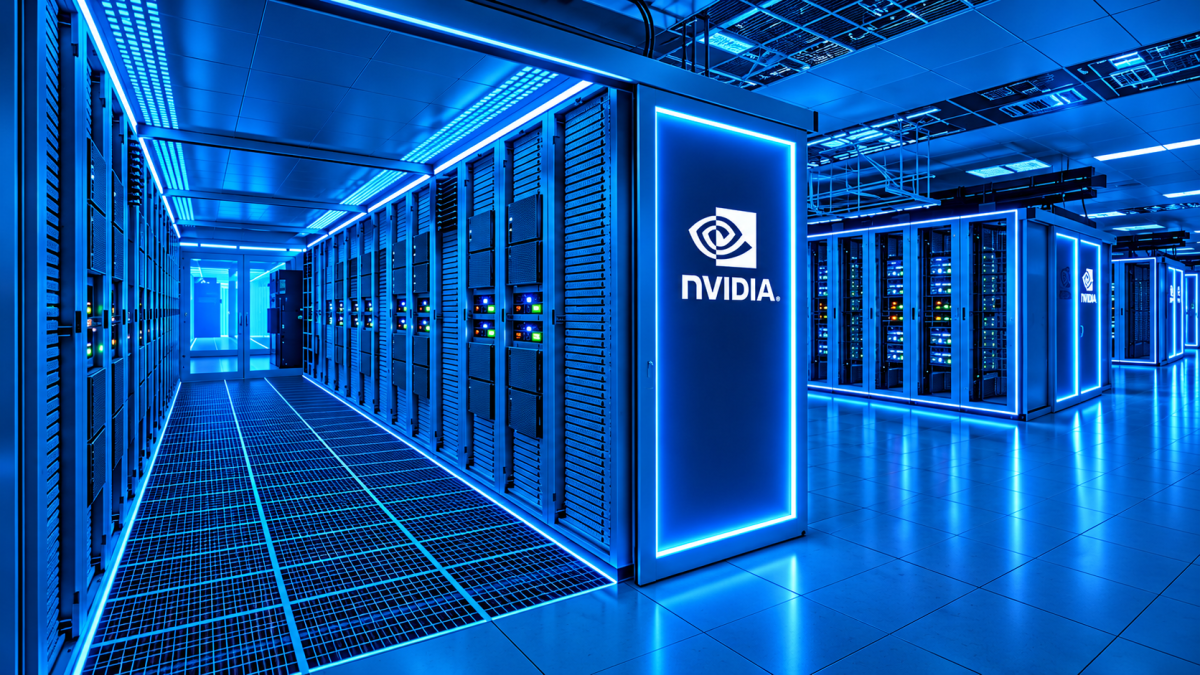
Artificial Intelligence is transforming how businesses operate, develop products, and make decisions. From Generative AI and Large Language Models (LLMs) to autonomous AI agents and advanced machine learning, modern applications require significantly more computing power than traditional IT infrastructure can provide.
This growing demand has made GPU as a Service (GPUaaS) an important part of the modern cloud computing ecosystem.
Instead of purchasing expensive GPU hardware, businesses can access high-performance GPU resources through cloud infrastructure and use them whenever their workloads require additional computing power.
As we approach 2027, GPU cloud computing is becoming increasingly important for organizations looking to develop AI applications, accelerate machine learning, and manage demanding computational workloads.
But what exactly is GPU as a Service, how does it work, and what should businesses expect from GPU technology in 2027?
Let’s explore.
What Is GPU as a Service (GPUaaS)?
GPU as a Service is a cloud computing model that allows businesses and developers to access Graphics Processing Units (GPUs) over the internet without purchasing and maintaining physical GPU hardware.
A GPU is designed to perform thousands of calculations simultaneously, making it particularly useful for computationally intensive workloads.
Unlike traditional CPU-based computing, GPU infrastructure can accelerate tasks that require massive parallel processing.
With GPUaaS, organizations can access computing resources based on their requirements, workload size, and performance expectations.
Common GPUaaS applications include:
- Artificial Intelligence and Machine Learning
- Deep Learning and Neural Networks
- Generative AI and Large Language Models
- AI Model Training and Inference
- Computer Vision and Image Processing
- 3D Rendering and Animation
- Scientific Research and Simulations
- Big Data Analytics
This model makes high-performance computing more accessible to startups, enterprises, research institutions, and software development teams.
Why Is GPU as a Service Becoming Important?
The rapid adoption of AI has increased the demand for advanced computing infrastructure.
Traditional servers are suitable for everyday business applications, databases, websites, and enterprise software. However, AI training, deep learning, and large-scale data processing often require specialized GPU acceleration.
Building an in-house GPU infrastructure can involve substantial investment in:
- High-performance GPU hardware
- Data center infrastructure
- Power and cooling systems
- Network connectivity
- Hardware maintenance
- Technical management
GPU as a Service provides an alternative by allowing organizations to access GPU computing without managing all the physical infrastructure themselves.
Key Benefits of GPU Cloud Computing
1. Reduced Initial Investment
Businesses can access GPU resources without purchasing expensive hardware or building dedicated infrastructure.
2. Flexible Scalability
Computing resources can be adjusted according to changing project requirements.
3. Faster AI Development
Developers can access GPU acceleration for training, testing, and deploying AI models.
4. Better Resource Utilization
Organizations can select infrastructure based on workload requirements instead of maintaining permanently underutilized hardware.
5. Access to Advanced GPU Technology
Cloud GPU platforms provide access to different GPU configurations and hardware generations, depending on provider availability.
GPU Technology Trends to Watch in 2027
The GPU industry is evolving rapidly. In 2027, several developments are expected to influence how businesses build and deploy AI infrastructure.
Here are some important trends to watch.
1. NVIDIA Vera Rubin and Next-Generation AI Infrastructure
One of the major developments shaping the GPU landscape is NVIDIA’s Vera Rubin platform.
Following the Blackwell architecture, the Rubin platform represents another step toward advanced AI computing infrastructure.
NVIDIA announced the Vera Rubin platform in 2026, bringing together GPUs, CPUs, networking, and other components designed for large-scale AI workloads.
These developments are particularly relevant for:
- Large Language Model training
- Advanced AI inference
- Agentic AI applications
- Multimodal AI systems
- Large-scale enterprise AI infrastructure
As next-generation GPU systems become more widely available, businesses will have more opportunities to access advanced computing resources through cloud platforms.
2. Growth of Agentic AI
AI applications are moving beyond simple chatbots.
Agentic AI systems can perform multi-step tasks, interact with tools, process information, and automate complex workflows.
These applications may require substantial computing resources for model inference, reasoning, and parallel execution.
GPU infrastructure will play an important role in supporting the next generation of AI-powered business applications.
3. AI Inference Will Become a Major Computing Requirement
AI model training receives significant attention, but inference is equally important.
Inference is the process of using an already-trained AI model to generate predictions, responses, or outputs.
For example:
- AI-powered customer support systems
- Intelligent business assistants
- AI recommendation engines
- Real-time image recognition
- Voice-based AI applications
- Enterprise AI chatbots
As businesses move AI applications into production, efficient GPU inference will become increasingly important.
4. High-Bandwidth GPU Memory and Faster Networking
Modern AI models require substantial memory and data-transfer capabilities.
GPU memory, high-speed interconnects, and networking technologies are becoming important factors in determining overall AI infrastructure performance.
In 2027, businesses should evaluate not only GPU processing power but also:
- GPU memory capacity (VRAM)
- Memory bandwidth
- GPU-to-GPU communication
- Storage performance
- Network bandwidth
- Data transfer latency
These components can significantly influence the performance of large AI workloads.
5. Energy-Efficient AI Data Centers
As GPU infrastructure expands, power consumption and cooling requirements are becoming important considerations.
Modern AI data centers need efficient power management, advanced cooling solutions, and optimized infrastructure designs.
In the coming years, energy efficiency will become an important factor when organizations evaluate GPU cloud providers.
GPU as a Service vs Traditional GPU Infrastructure
Businesses generally have two options when deploying GPU computing resources: purchasing their own GPU hardware or accessing GPU resources through a cloud service provider.
| Feature | Traditional GPU Infrastructure | GPU as a Service |
|---|---|---|
| Initial investment | High | Lower upfront investment |
| Hardware ownership | Required | Not required |
| Maintenance | Customer-managed | Provider-dependent |
| Scalability | Hardware-dependent | Flexible |
| Deployment | Requires setup | Cloud provisioning |
| Payment | Hardware purchase | Service-based pricing |
| Hardware upgrades | Customer-managed | Provider-dependent |
The right approach depends on workload requirements, security policies, long-term usage, and infrastructure budgets.
Organizations with predictable, continuous workloads may benefit from owning hardware, while businesses with changing requirements may prefer cloud-based GPU infrastructure.
Industries That Can Benefit from GPU as a Service
GPU cloud infrastructure is becoming useful across multiple industries.
Healthcare: Medical imaging, medical research, AI-assisted diagnostics, and drug discovery.
Education and Research: Scientific simulations, AI research, deep learning, and academic computing.
Manufacturing: Predictive maintenance, computer vision, industrial automation, and simulation.
Media and Entertainment: Video rendering, animation, visual effects, and content production.
Financial Services: Risk modelling, fraud detection, financial forecasting, and data analytics.
IT and Software Development: AI application development, LLM deployment, machine learning, and software testing.
How to Choose the Right GPU Cloud Provider
Selecting the right GPU infrastructure provider is an important decision for businesses planning AI projects.
Before choosing a GPUaaS provider, consider the following factors:
1. GPU Specifications: Evaluate GPU models, VRAM, processing capabilities, and compatibility with your workloads.
2. Performance Requirements: Understand whether your project requires GPU training, inference, rendering, or high-performance computing.
3. Scalability: Check whether resources can be upgraded or adjusted as your requirements increase.
4. Security: Evaluate access controls, network security, data protection, and infrastructure security practices.
5. Pricing Transparency: Understand GPU usage charges, storage costs, networking fees, and any additional service charges.
6. Technical Support: Choose a provider that can assist with infrastructure configuration, deployment, troubleshooting, and ongoing support.
A suitable GPU infrastructure solution should align with both your technical requirements and business objectives.
How CLOUDr Technologies Supports GPU and AI Infrastructure
As businesses increasingly adopt AI and high-performance computing, choosing reliable infrastructure becomes essential.
CLOUDr Technologies provides cloud infrastructure and IT solutions designed to support modern business requirements.
Its infrastructure offerings include GPU servers, dedicated servers, VPS, cloud platforms, and managed IT solutions.
Businesses exploring AI development and deployment can also explore solutions covering:
- GPU-powered computing
- AI and Machine Learning infrastructure
- Generative AI solutions
- AI Agent development
- Retrieval-Augmented Generation (RAG)
- AI Chatbots and Automation
- Cloud infrastructure and migration
Whether an organization is developing an AI application, experimenting with machine learning, or planning advanced computing workloads, the right infrastructure can support its growth.
Explore GPU server infrastructure for AI and Machine Learning from CLOUDr Technologies to understand how GPU computing can support demanding workloads.
You can also explore AI solutions and automation services for modern business applications.
The Future of GPU as a Service in 2027 and Beyond
The future of computing is becoming increasingly connected to AI acceleration.
With next-generation GPU platforms, expanding AI data centers, agentic AI, and growing inference requirements, organizations will continue to explore more flexible ways to access high-performance computing.
In 2027, GPU as a Service is expected to become an increasingly important infrastructure option for businesses developing and deploying AI applications.
However, successful AI adoption will require more than simply accessing powerful GPUs. Organizations must also consider infrastructure security, data management, networking, resource optimization, and ongoing technical support.
Businesses that select infrastructure according to their actual workloads will be better positioned to build scalable and efficient AI environments.
Conclusion
GPU as a Service is changing how organizations access high-performance computing.
By providing flexible access to GPU infrastructure, GPUaaS helps businesses explore AI, machine learning, deep learning, Generative AI, and other computationally demanding applications without necessarily investing in physical GPU hardware.
As the industry moves toward 2027, technologies such as NVIDIA Vera Rubin, advanced AI inference, and Agentic AI will continue to influence the future of GPU cloud computing.
For businesses planning their next stage of digital transformation, understanding GPU infrastructure today can help them prepare for tomorrow’s computing requirements.